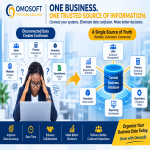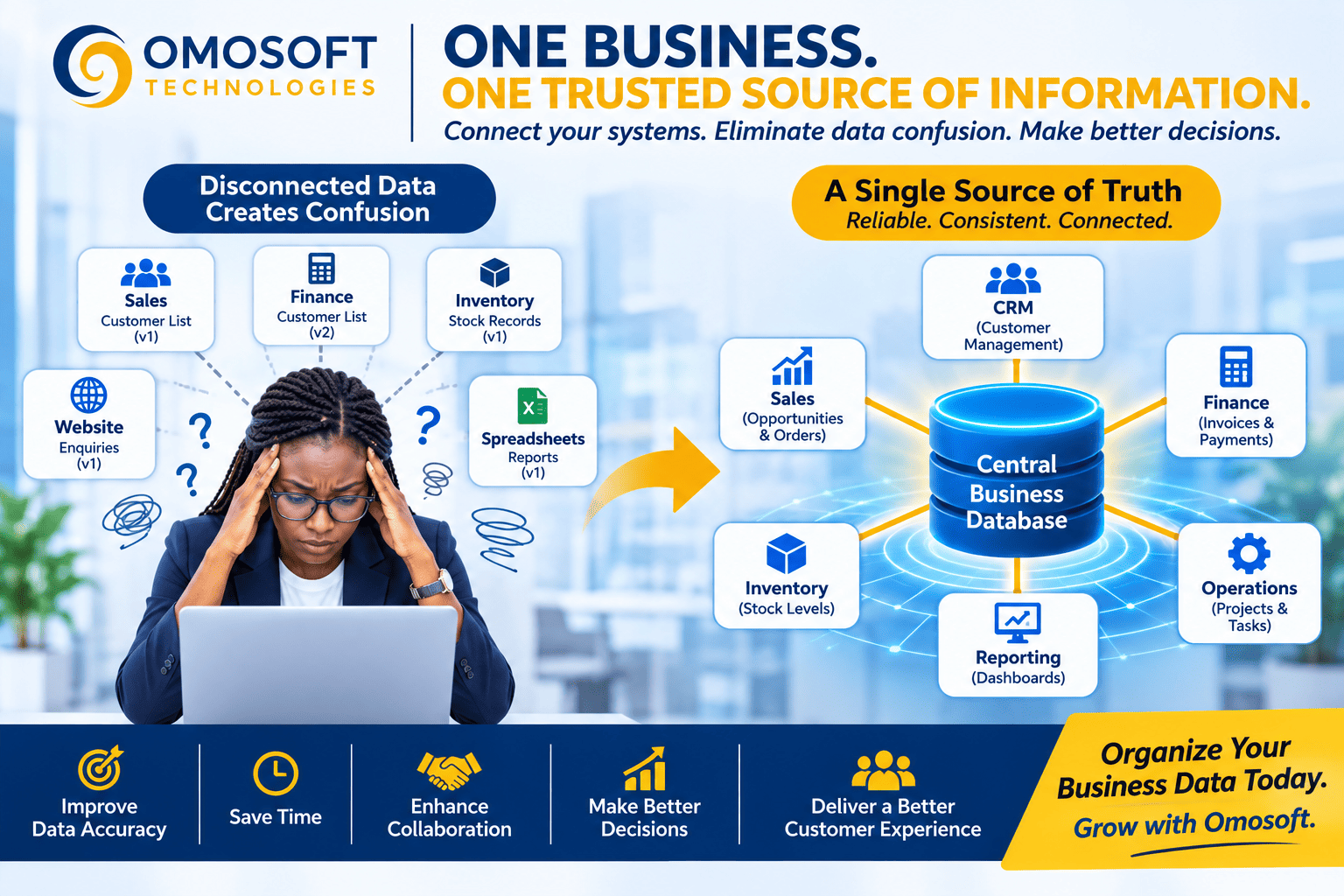
Imagine a business where the sales department has one version of customer information, the finance department has another, and management receives a completely different report.
A customer changes their telephone number, but only one
department updates its records.
The sales team records a new order in a spreadsheet, while
the finance team maintains a separate record. Meanwhile, management is working
with figures that were prepared several days earlier.
Which information should the business trust?
This is a common challenge for organizations that rely on
disconnected spreadsheets, separate databases, paper records, emails, and
independent software applications to manage their operations.
As a business grows, information becomes increasingly
difficult to manage when different departments use different systems without a
reliable way of sharing updates.
The solution is not necessarily to purchase more software.
It is to establish a better approach to managing business
information.
This is where the concept of a Single Source of Truth
(SSOT) becomes important.
A single source of truth helps an organization maintain
reliable, consistent, and accessible information across its operations. It
provides an agreed authoritative source for important business data, reducing
duplication, conflicting records, and unnecessary manual updates.
For businesses in Kenya, this approach can be particularly
valuable as organizations expand their operations, introduce digital systems,
serve more customers, and manage information across multiple departments and
locations.
In this guide, we explore what a single source of truth
means, why business data becomes fragmented, how centralized information
management works, and how businesses can build more connected and reliable
information systems.
What Is a Single Source of Truth?
A Single Source of Truth (SSOT) is an approach to
information management in which an organization maintains an authoritative and
trusted source for particular business information.
Instead of different departments maintaining conflicting
versions of the same records, employees and business applications rely on
approved information sources.
For example, consider customer information.
A business may currently store customer records in:
Ø Excel
spreadsheets
Ø Accounting
software
Ø Sales
management software
Ø WhatsApp
conversations
Ø Email
contacts
Ø Paper
files
Ø Individual
employees' computers
When these records are not properly synchronized, the
organization may end up with different versions of the same customer
information.
A single source of truth establishes which system or record
is authoritative for that information.
For example:
Customer Database → Authoritative Customer Information →
Connected Business Applications
The sales system, accounting system, and customer service
platform can then access or exchange the relevant information through properly
designed integrations.
The important distinction is that a single source of truth
does not necessarily mean storing every piece of business information in one
physical database.
It means establishing clear ownership, consistency, and
reliable access to authoritative information.
Why Do Businesses End Up With Scattered Data?
Many businesses do not deliberately create disconnected
information systems.
The problem often develops gradually.
A business starts with a spreadsheet to record customers.
Later, it introduces accounting software.
As operations grow, the business purchases a CRM.
Then another department introduces an inventory system.
A website is developed to receive customer enquiries, while
employees continue using WhatsApp and email for communication.
Each new system solves an immediate problem.
However, if these systems are not designed to work together,
information becomes fragmented.
Common causes include:
1. Too Many Independent
Spreadsheets
Different employees maintain separate spreadsheets for
customers, sales, payments, stock, projects, and reports.
Over time, multiple versions of the same information emerge.
2. Disconnected Software
Applications
A business may use several applications that do not
automatically exchange information.
Employees must manually transfer data between them.
3. Duplicate Data Entry
The same customer, transaction, or business record is
entered into multiple systems.
This increases administrative work and creates opportunities
for errors.
4. Lack of Standardized
Processes
Different departments collect and record information in
different formats.
For example, one department may record customer names in
uppercase, another in lowercase, and another using abbreviations.
5. Poor Data Ownership
Nobody is clearly responsible for maintaining the accuracy
of important business records.
6. Systems Developed at
Different Times
A business may have older applications that were not
designed to communicate with newer software.
Without appropriate integration, each system becomes another
information silo.
What Problems Does Fragmented Business Data Create?
Scattered information is more than an administrative
inconvenience.
It can affect business performance, customer experience,
accountability, and decision-making.
1. Inconsistent Information
Different departments may have different versions of the
same customer, product, employee, or transaction record.
This makes it difficult to determine which information is
correct.
2. Duplicate Records
A customer may appear several times in the business database
because different employees entered the same information independently.
This can complicate reporting and customer communication.
3. Poor Decision-Making
Management decisions depend on reliable information.
If reports are prepared using incomplete or inconsistent
data, management may make decisions based on an inaccurate picture of the
business.
4. Wasted Employee Time
Employees may spend unnecessary time searching for
information, comparing spreadsheets, correcting records, and confirming figures
with other departments.
5. Poor Customer Experience
Customers may have to repeat information they have already
provided.
Different employees may also give inconsistent responses
because they cannot access the same customer history.
6. Delayed Reporting
When departments maintain separate records, preparing
consolidated reports can become a lengthy manual exercise.
7. Increased Operational Risk
Duplicate, outdated, or incorrectly maintained records can
create problems in financial reporting, customer management, inventory control,
and other important business processes.
What Does a Single Source of Truth Look Like in Practice?
Consider a business that sells products and services.
It receives customer enquiries through its website, social
media, telephone calls, and WhatsApp.
It also manages sales, quotations, payments, inventory, and
customer support.
Without connected systems, the information flow might look
like this:
Website Enquiry → Excel Spreadsheet → Sales Department
Records → Accounting Software → Separate Management Report
Each department may maintain its own information.
Now consider a more connected approach.
Website Enquiry → Central Customer Record → Sales
Workflow → Quotation → Payment Record → Reporting Dashboard
Relevant information is captured and shared through
authorized systems.
For example:
a) A
customer submits an enquiry through the website.
b) The
enquiry creates or updates the customer's record in the CRM.
c) The
sales team receives the relevant information.
d) A
quotation is prepared and associated with the customer.
e) When
a payment is confirmed, the relevant transaction information is updated.
f) Management
dashboards display information from the appropriate connected records.
This does not mean every application must share unrestricted
access to every database.
It means that information should move between systems
through controlled, reliable, and properly designed processes.
The Difference Between Centralized Data and a Single
Source of Truth
These two concepts are related, but they are not identical.
Centralized Data
Centralized data refers to bringing information together in
a common system, database, or managed environment.
For example, a business may replace several departmental
spreadsheets with a centralized business management application.
Single Source of Truth
A single source of truth goes further.
It establishes which information is authoritative, who is
responsible for maintaining it, how it is validated, and how other systems
should use it.
A centralized database can still contain inaccurate or
duplicate records.
Therefore, centralization alone does not guarantee data
quality.
A strong information management strategy requires:
Ø Clear
data ownership
Ø Standardized
records
Ø Validation
rules
Ø Consistent
definitions
Ø Appropriate
access permissions
Ø Reliable
integrations
Ø Regular
data quality checks
Ø Proper
backup and recovery procedures
The goal is not simply to put information in one place.
The goal is to make business information trustworthy.
Which Business Information Should Be Centralized?
Not every type of information needs to be managed in the
same system.
However, businesses should identify important information
that multiple departments or applications depend on.
Examples include:
1. Customer Information
A reliable customer record may include:
Ø Customer
name
Ø Contact
information
Ø Business
or organization
Ø Location
Ø Customer
category
Ø Assigned
account manager
Ø Communication
history
Ø Relevant
customer documents
2. Product and Service
Information
Businesses should maintain consistent information about:
Ø Product
names
Ø Product
codes
Ø Descriptions
Ø Prices
Ø Categories
Ø Availability
Ø Service
specifications
3. Employee Information
Employee records may include:
Ø Employee
details
Ø Department
Ø Job
role
Ø Employment
status
Ø Reporting
structure
Ø Assigned
responsibilities
Access to employee information should be appropriately
restricted.
4. Sales Information
Sales records may include:
Ø Customer
Ø Products
or services
Ø Quotations
Ø Orders
Ø Salesperson
Ø Transaction
status
Ø Relevant
dates
5. Financial Information
Financial systems may manage:
Ø Invoices
Ø Payments
Ø Receipts
Ø Expenses
Ø Outstanding
balances
Ø Financial
reports
Financial records should have clearly defined ownership and
appropriate controls.
6. Inventory Information
Inventory records may include:
Ø Stock
quantities
Ø Product
locations
Ø Stock
movements
Ø Purchase
records
Ø Reorder
levels
Ø Supplier
information
7. Operational Information
Depending on the organization, this may include:
Ø Projects
Ø Tasks
Ø Applications
Ø Approvals
Ø Service
requests
Ø Procurement
activities
Ø Customer
support cases
The right structure depends on the nature of the business
and the systems it uses.
How Can Businesses Build a Single Source of Truth?
Establishing a single source of truth is not simply a matter
of installing new software.
It requires a structured approach to understanding and
managing information.
Here are practical steps businesses can follow.
Step 1: Identify Where Business Data Currently Exists
Start by documenting where important information is stored.
Consider:
Ø Spreadsheets
Ø Paper
records
Ø Accounting
applications
Ø CRM
platforms
Ø Inventory
systems
Ø Websites
Ø Mobile
applications
Ø Email
accounts
Ø Internal
databases
Ø Cloud
storage platforms
The objective is to understand the current information
environment.
Step 2: Identify Duplicate and Conflicting Records
Look for information that exists in several places.
For example:
Ø Customers
appearing in multiple spreadsheets
Ø Different
versions of product prices
Ø Duplicate
employee records
Ø Inconsistent
supplier details
Ø Transactions
recorded differently by different departments
This helps identify the most important data quality
problems.
Step 3: Define the Authoritative Source for Each Data
Type
Decide which system should be considered authoritative for
each category of information.
For example:
|
Information |
Possible authoritative system |
|
Customer records |
CRM |
|
Product information |
Product or inventory system |
|
Financial transactions |
Accounting system |
|
Employee records |
HR system |
|
Sales opportunities |
CRM |
|
Stock quantities |
Inventory system |
These are examples, not universal rules.
A business should define ownership based on its actual
processes and technology architecture.
Step 4: Standardize Data
Create consistent rules for recording information.
For example:
Ø Standard
date formats
Ø Consistent
customer identifiers
Ø Standard
product codes
Ø Consistent
telephone number formats
Ø Defined
customer categories
Ø Standard
naming conventions
Where appropriate, use validation rules to reduce incorrect
entries.
Step 5: Clean Existing Information
Before transferring information into a new or centralized
system, review existing records.
Look for:
Ø Duplicate
entries
Ø Missing
information
Ø Incorrect
values
Ø Outdated
records
Ø Inconsistent
formats
Ø Invalid
references
Importing poor-quality data into a new system simply
transfers existing problems.
Step 6: Integrate Business Systems
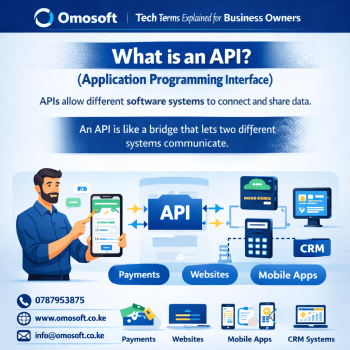
If different applications need to share information,
determine how they should communicate.
Possible approaches include:
Ø APIs
Ø Database
integration
Ø Secure
data exchange
Ø Scheduled
synchronization
Ø Webhooks
Ø Approved
middleware or integration platforms
The appropriate method depends on the systems involved and
their technical capabilities.
Step 7: Establish Access Controls
Not every employee should have access to every type of
business information.
Use appropriate permissions to determine:
Ø Who
can view information
Ø Who
can create records
Ø Who
can edit records
Ø Who
can approve changes
Ø Who
can access reports
Ø Who
can export information
This improves accountability and helps protect business
information.
Step 8: Monitor and Maintain Data Quality
A single source of truth is not a one-time project.
Businesses should regularly review:
Ø Duplicate
records
Ø Incomplete
information
Ø Failed
integrations
Ø Incorrect
data
Ø Unauthorized
changes
Ø Outdated
records
Ø Access
permissions
Data quality must be maintained continuously.
The Role of System Integration in Creating a Single
Source of Truth
System integration is one of the most important components
of a connected business information environment.
A business may already have good software applications.
The problem may simply be that they operate independently.
For example, a company may use:
Ø A
website for customer enquiries
Ø A
CRM for sales management
Ø Accounting
software for financial records
Ø An
inventory system for stock
Ø A
reporting application for management
Without integration, employees may need to transfer
information manually.
System integration can allow relevant applications to
exchange information through defined interfaces and workflows.
For example:
Website → CRM → Sales Management → Accounting → Reporting
This helps reduce duplicate data entry and makes information
more consistent across the organization.
However, integrations must be designed carefully.
Businesses should consider data ownership, synchronization
frequency, error handling, security, and what happens when systems become
unavailable.
For a deeper explanation, read our related article:
Why
Your Business Systems Should Work Together: A Practical Guide to System
Integration
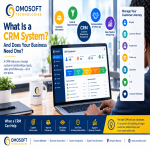
How CRM Supports a Single Source of Truth
Customer information is among the most important information
assets a business manages.
When customer records are scattered across spreadsheets,
emails, and individual devices, employees may struggle to understand the
complete customer relationship.
A CRM can provide a structured environment for managing
customer records, leads, communication, sales activities, and follow-ups.
For example:
New Customer → Customer Record → Sales Activities →
Quotations → Follow-Ups → Customer History
Other business applications can then exchange relevant
information with the CRM where appropriate.
However, a CRM should not automatically become the
authoritative source for every type of business information.
Financial records, inventory quantities, and employee
information may have their own authoritative systems.
The important thing is to establish clear ownership and
reliable information exchange.
Read our related guide:
What
Is a CRM System and Does Your Business Need One?
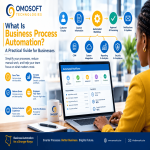
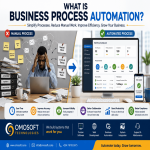
Can Business Process Automation Improve Data Management?
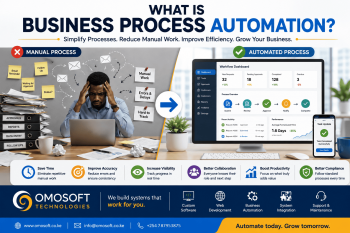
Yes.
Automation can help ensure that information is captured,
validated, transferred, and updated consistently.
For example:
Customer submits application
↓
System validates required information
↓
Customer record is created or updated
↓
Application is assigned
↓
Responsible employee is notified
↓
Application status is updated
↓
Management dashboard reflects the latest information
This reduces dependence on repetitive manual activities.
Automation can also help identify incomplete records,
trigger reminders, and notify responsible employees when an action is required.
However, automation should be built around well-defined
processes and reliable data.
Automating an incorrect workflow can simply make incorrect
information move faster.
Read:
What Is
Business Process Automation? A Practical Guide for Businesses
Single Source of Truth and Cloud vs. On-Premise Software
Businesses sometimes assume that establishing a single
source of truth requires moving all their information into the cloud.
That is not necessarily the case.
A single source of truth can be implemented using
cloud-based systems, on-premise infrastructure, or a hybrid architecture.
The right approach depends on:
Ø Business
requirements
Ø Existing
infrastructure
Ø Data
protection obligations
Ø Security
requirements
Ø Connectivity
Ø Integration
needs
Ø Maintenance
capabilities
Ø Budget
For example, an organization may use cloud-based CRM
software while maintaining a specialized internal application on its own
infrastructure.
What matters is that the systems have clearly defined
authoritative records and reliable ways of exchanging information.
The hosting model and the information management strategy
are related decisions, but they are not the same thing.
Data Security and a Single Source of Truth
Centralizing or connecting business information can improve
management, but it also requires careful attention to security.
A well-designed information environment should consider:
Role-Based Access Control
Users should only access the information required for their
responsibilities.
Authentication
Use appropriate authentication controls to protect business
accounts.
Encryption
Protect information during transmission and, where
appropriate, while stored.
Audit Trails
Maintain records of important activities and changes.
Backups
Ensure that important business information can be recovered
when necessary.
Secure Integrations
Applications exchanging information should use appropriate
authentication and secure communication methods.
Data Protection
Businesses operating in Kenya should also consider their
obligations under applicable data protection requirements, including the Kenya
Data Protection Act, 2019, where relevant.
A single source of truth should make information more
reliable without making it unnecessarily accessible.
For more on protecting business information, read:
Is Your
Business Data Really Safe? Why Cybersecurity Is a Business Issue, Not Just an
IT Issue
How Does a Single Source of Truth Improve Business
Decision-Making?
Business decisions are only as reliable as the information
used to make them.
Imagine management wants to know:
Ø How
many active customers does the business have?
Ø Which
products are performing best?
Ø How
much revenue was generated this month?
Ø Which
invoices remain unpaid?
Ø How
many sales opportunities are active?
Ø Which
departments are experiencing delays?
Ø What
is the current inventory position?
If every department maintains different records, management
may need to spend considerable time reconciling information before making
decisions.
A connected information environment can make relevant
information easier to access.
Dashboards and reports can then provide management with a
clearer picture of business operations.
This does not mean every dashboard must display real-time
information.
Some information is updated immediately, while other reports
may depend on scheduled synchronization or periodic reconciliation.
The important thing is that management understands where the
information comes from, how current it is, and what it represents.
Common Mistakes Businesses Should Avoid
Building a single source of truth requires more than
purchasing a centralized database or business application.
Here are some common mistakes.
1. Assuming One Database Solves
Everything
A centralized database can still contain duplicate,
inaccurate, or outdated information.
Data governance and quality controls remain essential.
2. Buying New Software Before
Understanding the Problem
The first step should be identifying where information is
fragmented and why.
3. Ignoring Existing Systems
A business may already have useful applications that can be
integrated rather than replaced.
4. Failing to Define Data
Ownership
If nobody knows which system is authoritative, conflicting
records will continue to emerge.
5. Ignoring Employee Workflows
Employees should understand how information is captured,
updated, and shared.
6. Automating Without Validation
Automation should not blindly transfer incorrect information
between applications.
7. Neglecting Security
Centralized information must be protected through
appropriate access controls, monitoring, and recovery procedures.
8. Trying to Transform
Everything at Once
Start with important information categories and processes,
then expand gradually.
Signs Your Business Needs Better Data Management
Your organization may need to establish a stronger
single-source-of-truth strategy if:
Ø Different
departments maintain separate customer records.
Ø Employees
frequently ask colleagues for information.
Ø The
same information is entered into multiple systems.
Ø Management
reports regularly contain conflicting figures.
Ø Customer
information is difficult to locate.
Ø Employees
use different versions of the same spreadsheet.
Ø Updating
one system does not update related systems.
Ø Business
decisions are delayed while information is reconciled.
Ø You
cannot easily identify which records are accurate.
Ø Your
business is growing faster than your current information management approach.
These signs indicate that the organization may need better
data governance, centralized information management, system integration, or a
combination of these.
How Omosoft Technologies Can Help
At Omosoft Technologies, we believe that business
information should support better decisions, efficient operations, and stronger
customer relationships.
We help businesses explore practical technology solutions
for organizing, managing, and connecting their information.
Depending on the organization's requirements, this may
involve:
Ø Custom
software development
Ø Centralized
business management systems
Ø CRM
solutions
Ø Database
design and management
Ø System
integration
Ø API
development and integration
Ø Business
process automation
Ø Reporting
dashboards
Ø Web
applications
Ø Digital
transformation
Our approach begins by understanding how information
currently moves through the organization.
We examine:
Ø Where
business information is stored
Ø Which
departments use it
Ø Where
duplication occurs
Ø Which
systems need to communicate
Ø Which
records should be authoritative
Ø How
information should be protected
Ø What
management needs to see
From there, we identify an appropriate solution.
Sometimes the answer is integrating existing applications.
Sometimes it involves improving database structures or
introducing a centralized management system.
In other situations, custom software may be the most
suitable option.
The objective is not simply to collect more data. It is
to make the information your business already has more useful, reliable, and
accessible to the right people.
Frequently Asked Questions About a Single Source of Truth
What is a single source of truth in business?
A single source of truth is an information management
approach in which an organization establishes an authoritative and trusted
source for important business data. It helps reduce conflicting records and
improve consistency across departments and applications.
Why is a single source of truth important?
It helps businesses reduce duplicate information, improve
data accuracy, support reporting, improve collaboration, and make decisions
using more reliable information.
Does a single source of truth mean all data must be
stored in one database?
No. Different applications can remain responsible for
different information categories. The important requirement is that data
ownership, authoritative records, and information exchange are clearly defined.
What is the difference between centralized data and a
single source of truth?
Centralized data brings information into a common
environment. A single source of truth additionally establishes which records
are authoritative, how they are maintained, and how other systems use them.
Can small businesses benefit from a single source of
truth?
Yes. Small businesses can begin by organizing customer,
sales, inventory, and financial information. A simple, well-managed information
structure can make growth easier to handle.
How does system integration support a single source of
truth?
System integration allows different applications to exchange
relevant information. This can reduce manual data entry and help maintain
consistent records across business operations.
Is cloud software necessary for a single source of truth?
No. A single source of truth can be implemented using cloud,
on-premise, or hybrid systems. The best approach depends on business
requirements and technical capabilities.
Does a CRM provide a single source of truth?
A CRM can serve as the authoritative source for customer and
sales information. However, other information categories may have separate
authoritative systems, such as accounting software for financial records or
inventory software for stock information.
Conclusion: Better Business Decisions Begin With Better
Information
As businesses grow, the amount of information they generate
and manage increases.
When that information is scattered across disconnected
systems, spreadsheets, emails, and paper records, organizations can struggle
with duplication, inconsistency, delays, and poor visibility.
A single source of truth provides a more structured
approach.
It helps businesses establish authoritative information,
improve data quality, connect applications, and give employees access to
reliable records.
But remember:
A single source of truth is not simply about putting all
your data in one place. It is about making sure your business knows which
information to trust.
Start by identifying where your information exists.
Determine which records are authoritative.
Improve data quality.
Connect systems where necessary.
Establish appropriate security and access controls.
Then build on that foundation as your organization grows.
For businesses in Kenya and beyond, better information
management is an important step towards more efficient operations and
meaningful digital transformation.
One business. Connected information. Better decisions.
Omosoft Technologies — Building Technology That Solves
Real Business Problems.